How Back to Mathematics works
A problem every day
Everyone gets the same daily problem. Try it without signing in. There’s no timer and no score, and hints are free.
A table of six
When you’re ready, take a seat in a club of six, matched softly by city and interests. Small enough that your voice matters and your absence is noticed. You can also stay solo as long as you like.
Learn a little, solve one problem
Each day your club gets a short lesson, three or four screens, leading to a single problem. Its discussion opens once you’ve solved it or chosen to see the solution, so nobody spoils it for you.
The month’s big question
One open question stays pinned all month. Collect examples, make conjectures, try to break each other’s. Your club’s mentor drops in; Lemma, an AI assistant, gives hints when asked, and everyone at the table sees what it says.
Write-ups and the living feed
Write up what you found. Clubmates nominate good write-ups; a person gives each a light check for spoilers and anything personal, and the best appear in the weekly living feed. No likes, no ranking.
Your seat, kept fairly
Clubs work when people show up. If you’re away for 15 days, your seat passes to someone waiting. Busy month? Use your pause pass: up to 15 days, once every 6 months. Your diary, stamps and write-ups always stay yours, and you can take a new seat any time.
Marathons and melas
Once a month your club plays a 48-hour team marathon. When enough members share a city, leagues and in-person festivals follow.
Free, always
Problems, clubs and the feed will never sit behind a paywall. We charge only for in-person gatherings.
The kind of company you’ll keep
Harish-Chandra
He trained as a physicist under Paul Dirac before switching to mathematics.
His work on the symmetries of Lie groups now shapes much of number theory and physics. The Harish-Chandra Research Institute in Prayagraj bears his name.
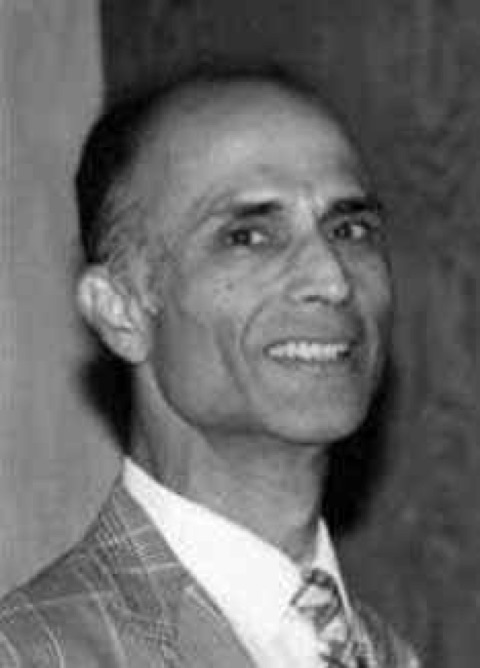
Unknown author, CC BY 4.0, via Wikimedia Commons (resized)